Sunday, December 8, 2024

ECTO reflection #2

Confirmation Bias

Confirmation bias stands as one of the most important topics discussed through our ECTO presentations in my opinion. Not only is it fairly unknown by many but it affects people in ways that can be detrimental to society in extreme situations. Every one of us does this. For example I know a lot about football, if someone tells me something about a player I follow that I didn’t know I will often dismiss what they say as false thinking I know more. I remember this happening when Odell Beckham jr. was one the New York Giants. This is called having a fixed mindset. 

This fixed mindset also known as a closed mindset can be dangerous as often change is good. When people hold on to fixed mindsets we can see a decrease in progress. Honestly no one cares about my opinion on a washed up NFL player however when it comes to other issues confirmation bias can forge long standing issues. Politics for example is one of the most dangerous cases for confirmation bias. Voters are more likely to believe news that confirms their own biases. This means voters pick and choose what news to believe and what to dismiss. This is what Fox News and CNN thrive off of. Preying on the biases of the individual to push their parties agenda.

This bias leads to less educated voters who don’t fully grasp the intentions of their candidate. This reminds me of the famous saying “don’t judge a book by its cover”. If voters are only absorbing what they need to confirm their support for their chosen candidate they miss out on the bad he or she is doing or the good their opponent might accomplish. 

News can reinforce our beliefs but we should also challenge them. If we take everything at face value we leave ourselves open to being taken advantage of. As stated in the presentation this will most affect the youth through their parents and the information they absorb through social media, which often turns into an echo chamber based on what the viewer wants to see. 


Final Post

Our Relationship With Technology and Social Media

Technology is not a bad thing, it is raw knowledge and power. It is up to those who use this power to change our world for the better or for the worse. Technology has been a pivotal aspect of our society however often seems to do more damage than good. According to a study conducted by Ching-Ting Hsin, Ming-Chaun Li, and Chin-Chung Tsai, Department of Early Childhood Education , National Taitung University, Taiwan. With proper education students' education can exponentially grow, however when young users are left to their own devices we can see a drastic fall in mental health and education.

Issues like cyber bullying and poor self image have grown rampaped in the last few years. Social media contributes to not only negative mental health but the countries youth suicide rates. According to a study covered mentioned in this article from 2007-2017 there has been a 56% increase in suicides in ten years. This rise in deaths blame can not be put alone on social media as many other issues are present in the lives of the American youth.


Compared to 35 years ago the world is a completely different place. With the internet only beginning to enter the world, no one could have predicted the growth technology would have. With all the great innovation there is a lot left that us as a people are yet to fully grasp. For starters the attention taken by social media and our smartphones remove us from the socialization of our world. “The paradox of modern life is this: we have never been more connected and we have never been more alone.” Matt Haig

On the other hand gen z is the first generation growing up in a world that has fully integrated and accepted technology. In my own life I have been using social media for the last 8 years I got my first smart phone at 11. Social media was never a huge draw for me but even from the perspective of someone who doesn’t care that much I find myself doomscrolling and often comparing myself to the people I see on my feed. In addition the use of technology in planning events and socializing with my friends has grown to become a necessity if you don’t use it you are left out.   

35 years ago there was no such thing as Snapchat. Your mom never sat at home having a bad day scrolling through her feed seeing all of her friends having better lives than her. This brings up one of the most common misconceptions of social media. People believe it is fact while in truth most is fiction. People will only post what they want you to see, good days not bad ones and only the best pictures. This matched with the rise and convenience of photo editing lowering many individuals self-esteem, self-worth, and health as they strive to reach unattainable goals.


If we think of our relation to technology as a relationship, it is one with an imbalance of power. It’s rather toxic, as a joke I took this a little more seriously. What if we were actually in a relationship with technology, just how toxic would it be…


You feel guilty and it's always your fault. - most people who face mental health issues stemmed from social media don’t consider social media to blame but rather turn their own low self esteem back on them blaming themselves


Your partner is obsessively jealous. - at time of writing this I have 23 notifications from instagram it's only noon. Apps will use notifications to reel in its users attempting to pull them away from other tasks.


Your never good enough - Comparing yourself to what you see through unrealistic expectations set on social media can lead to drops in self esteem and mental health 


Doesn’t respect flaws - social media a a community expects us to cover up our flaws with filters as only the prettiest, funniest, most popular seem to get all the support from the community.


Our lives are hard enough as it is. There is already so much toxicity in the world and in the relationships we already have we don’t need it online as well. 


Friday, November 22, 2024

AI: Splitting the Seams of Privacy

AI is the future. Beginning as a concept of science fiction as a way to create a better society often resulting in the AI going crazy and killing people. In reality AI is a tool just like a computer or a hammer. It is up to the individual using it to accomplish tasks and objectives. As stated in the video AI over the last few years has developed into a “driving force of Inequality”. In the video In the Age of AI The wealthy can utilize AI to prefer capital over labor with AI being able to accomplish many tasks making thousands of jobs obsolete. 

If the world continues to follow this path of automation the gap between the rich and the poor will only continue to grow leaving less and less room for growth among lower class individuals. AI un-evens the playing field between bigger and smaller companies, with large companies like Meta being capable of targeting what a client is interested in supplying it. The major thing about this that frightens me is the organizations shaping what you see does not have your best interest at mind but rather the idea of making money. 


The lack of privacy stands out as one of the largest detriments of artificial intelligence, through data mining and companies learning about you. In turn, according to Shoshana Zuboff “whenever we search or whenever we browse we leave behind digital traces of our information.” Google with this technology they could fine tune to predict what people want. By taking uncertainty out of the equation we give up a lot of our indepence to technology on the premise it was good for us even if that isn’t the intention of the company. 
The social contagion experiment where Facebook through online messaging attempted to discover if they could influence real world decisions. Goal was to get people to the polls in the 2010 election through the ”I voted” icon collectively getting 300,000 people to vote. They learned they could influence emotion and change real world behavior without them knowing. Products like Google Home or
Alexa put AI inside the home to learn more about you and grow overtime. Personally, this is very frightening to me. This brings us back to what we see of AI in those science fiction movies like “2001 A Space Odyssey”. This leads to anyone with enough money can get this data and use it to sway opinion to wherever they want it to go. For example with enough effort a politician can utilize this data to win a presidential election by using the data of people to give them what they want. 


Wednesday, November 20, 2024

ECTO 2 - Misinformation


Hi I’m Owen, It is important people understand the vocabulary methods of determining if information is either misinformation, malinformation, disinformation. Starting with misinformation, This is false content, however the person sharing doesn’t realize that it is false. This is frequently a piece of disinformation viewed by someone who doesn’t realize it’s false and shares it with their networks without the intent to do harm. Next disinformation, this is content that is intentionally false and designed to cause harm. It is motivated to make money, gain political influence either foreign or domestic. Or to cause chaos. 

Malinformation is information that is true but reported out of context. Some methods of this false information can be seen through many different forms from the least harmful satires, disinformation made for the purpose of comedy to more dangerous forms Fabricated context for example like stating third world countries possess weapons of mass destruction with the purpose of drumming up fear to result in mass panic and war, we have seen this used by the American government throughout history.

In recent days Misinformation has grown from a concept to a full blown fear of Americans. Terms like Fake News directly contradict the 1st amendment. People are given the right of freedom and press, to say anything on the matters they care about. With few exceptions like threats and libel, a person according to the constitution can say more or less anything they want whenever they want. There are a lot of people with strong opinions and a lack of facts. The information they spread could be wrong whether out of ignorance or on purpose.


 However it is not the governments place to control this information and censor what they deem false. It is rather up to the people to learn the difference between information and disinformation to form their own conclusions. The government presents laws to curb the spread of misinformation and lies on social media the issue is this would likely cause more harm than good and result in information true or false that contradicts the government being removed and in doing so this would go against the first amendment clauses of Freedom of Speech and Freedom of Press.


Some functions to uncover and disproving this false information can be useful to individuals to prevent the further spread of misinformation. These strategies include looking for signs of false information. Clickbait for starters is used to draw in views that can be shocking or flashy images to draw attention. While reading this information often emotionally triggering phrases or views can be presented to draw out emotions. When emotions are heightened often people overlook facts and reality. 


Extraordinary claims are often used to shock the audience it’s safe to say in many situations these claims are false. That being said, the most important thing a person can do to avoid disinformation is to fact check. Find multiple sources on the subject to grow your knowledge on the field prior to making your opinions and claims in the area. 

Thank you for listening Does anyone have any questions 


Monday, November 18, 2024

Privacy


As like most Americans I value my individual privacy and independence. However I also understand that privacy is more of a myth than a reality in today's age. With technology like facial recognition and social media the people of today live their lives through technology without even realizing their entire life is online. The concept of electronic tattoos was mentioned in the TED talk by Juan Enriquez. Electronic tattoos brand the individual and make them immortal connected to the web. From a young age my dad would warn me about the dangers of living your life online. All it takes is one mistake to mess up someone’s life. 

On a larger scale the government is one of the largest forces against the idea of privacy. Since the 2001 patriot act, the United States government and the people of America agreed to give up freedom in exchange for safety. This extends from license cameras and cell towers as depicted in the TED talk by Catherine Crump. With the more technology introduced to keep tabs on us the country grows closer to that of George Orwells 1984 and the movie Minority Report.


Government officials are getting upset that 
Tech companies are working out of their way to protect clients from the government intercepting their information. This concept of tapping phones and computers brings up an interesting debate on when protection goes too far. Is it worth living lacking freedom in exchange for the chance to find a terrorist. Personally I value my privacy and I agree with Christopher Soghoan that I don’t want to live in a world controlled by the government on the pretense of stopping crime.  

Technology is great and it contributes a lot to the world however it takes away a lot of the rights we are entitled to without us knowing. It is impossible to fully stay private in today's age but through smart choices and use of encryption software we can stay a little more protected.


ECTO 1 Reaction:The World Wide Web


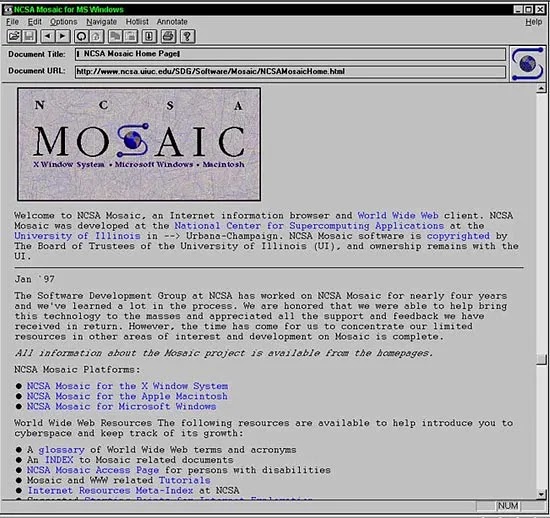
The World Wide Web first logged onto the scene in 1992 by Inventor Tim Berners-Lee in association with CERN. The internet however was born nearly ten years prior in 1983 however before the invention of the “Web” Accessing information online required coding skills, skills in programming and an overall intuition in the field of computers. This would make using the internet unreachable for many individuals. There are many people who hardly understand how to use the internet now. Imagine how bad it was before Berners-Lee's invention. With the inclusion of the Web Berners-Lee solved this problem by creating a user-friendly system that could be used by anyone. He developed three essential tools to make this possible: HTML, a language for creating pages; HTTP, a protocol for sharing information; and the first web browser. With language sharing and a basic web browser a programmer could build upon this foundation to share their website with the world in a fashion allowing anyone to view it. 


The World Wide Web changed the world of computers, solving many of the problems in communication individuals were struggling with. The Web paved the way for instant communication from computer to computer allowing for not only instant communications between individuals but between companies and consumers as well. For one of the first times in history you could be in a chat room with people living on the other side of the world from the comfort of your living room. This would also set up the rise of e-commerce, businesses like Amazon and eBay changed the way we shop.

The challenges that followed the WWW to some out weigh a lot of the benefits. At launch open access servers came in major issues like privacy, the spread of
Disinformation and Malinformation. Scams would become more frequent and many did not understand systems well enough to not get taken advantage of. In addition online businesses like Amazon would go on to monopolize a lot of the shopping industry putting tons of smaller businesses out of work. In the end, the WWW transformed our lives for the better or for the worse is up to you. Berner-Lee did not make something good or bad, however he did give us tools to create on our own. I had missed the presentation day therefore my notes are comprised of the topics side and overall information. 


Wednesday, November 6, 2024

The First Camera Phone


Hey everyone today I’m going to talk about how a simple invention changed the world of communication forever. The first camera phone has an interesting start as an invention. Through my research I have discovered 3 separate phones that claim to be the original camera phone. These include from South Korea, Samsung SCH-V200, and from Japan, Kyocera Visualphone VP 210. These are considered the first commercial camera phones being invented in 2000, 1999 respectively. But someone beat them too, not Apple, Sony, Microsoft or Nokia but a dad to be who might have watched a few spy movies. 

Finally from sunny parking lot of a Santa Cruz hospital Philippe Kahn Jerry rigged or “macgyvered” if you will the very first Camera phone on June 11th 1997, through the use of his Motorola a micro camera and the wire to his cars speaker system Kahn sent 2,000 people simultaneous the first picture to be taken with a mobile phone of his daughter Sophie. This picture would go on to be included in the TIME Magazine’s 100 Most Influential Images of All Time.  


One of the major issues with the new camera phones was its ground breaking technology for the time. Many of the companies racing to create the best product struggled to fit both a phone camera and ability to connect in a similar device. At first most products had separate cameras and phones built and housed in the same structure. Bluetooth became utilized however was limited. Similar to regular cameras SD cards and USB cables could be used to upload photos taken on the phone to a computer. Over the next few years companies would begin attempting to integrate the phone and camera into a more seamless combination. 


This invention would be fairly overlooked the next few years companies did it but most considered it a novelty or a fad due to low quality pictures (started at 0.3 megapixels in comparison IPhone 15 48 megapixel camera) overall lack of need for it and high prices. Some other issues faced by the first camera phones included slower image transfer, poor low-light performance, limited functionality for example couldn’t zoom flash and many other settings seen on other cameras were not present. These phones were bulky and awkward to use and handle. Finally, the ease of taking photos with a phone worries people about their privacy. Most issues overtime would be fixed in this sense with more recent phones with more options and better graphics, lighting and less bulk, however privacy continues to be a major concern for many. 

Camera phones were somewhat unsuccessful however did change the phone industry. It started with smaller cameras on more phones. In a few years a phone became more than a phone. No longer did you have one only for calls or texts but to socialize on a deeper level. Without the invention of the camera phone we may never have created other world changing inventions like the smartphone. In fewer words camera phones walked so smartphones could run. 


Does anyone have any questions 


Anti-War

  Anti-War Anti-war has been an idea ever since wars were. Throughout history we see hundreds of men and women fight against the fight. Fro...